
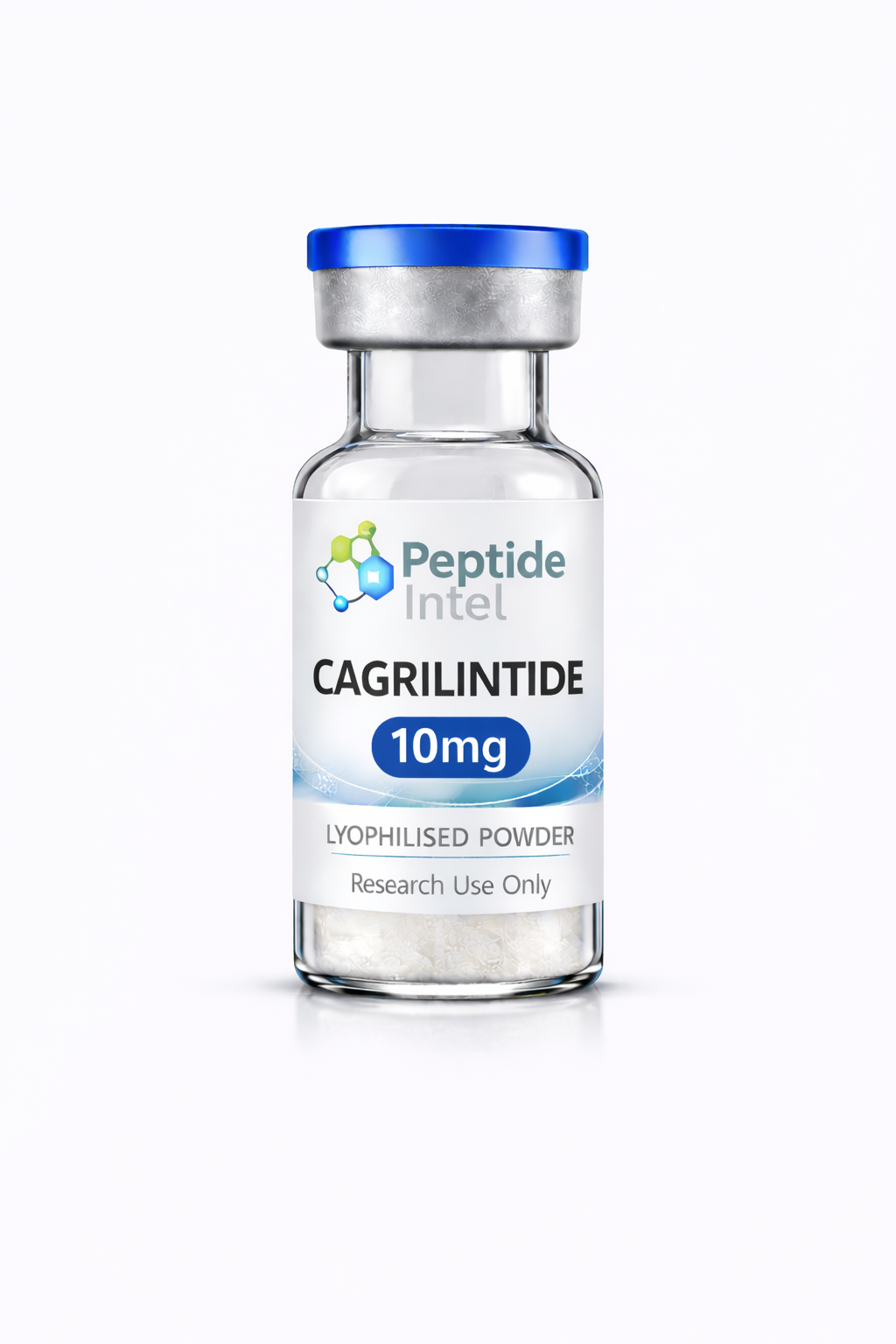
Cagrilintide 10mg
Cagrilintide | 10mg
The next frontier in metabolic science isn’t just about suppressing appetite — it’s about addressing the hormonal root of why we overeat in the first place. Cagrilintide is a long-acting synthetic analogue of amylin, a naturally occurring peptide hormone co-secreted alongside insulin by the pancreatic beta cells. Developed by Novo Nordisk and currently progressing through Phase 3 clinical trials, Cagrilintide works through an entirely different pathway to GLP-1 therapies — making it one of the most exciting and complementary compounds in metabolic research today.

-
Free worldwide shipping on all orders over $100
-
Delivers in: 3-7 Working Days Shipping & Return
Cagrilintide | 10mg
The next frontier in metabolic science isn’t just about suppressing appetite — it’s about addressing the hormonal root of why we overeat in the first place. Cagrilintide is a long-acting synthetic analogue of amylin, a naturally occurring peptide hormone co-secreted alongside insulin by the pancreatic beta cells. Developed by Novo Nordisk and currently progressing through Phase 3 clinical trials, Cagrilintide works through an entirely different pathway to GLP-1 therapies — making it one of the most exciting and complementary compounds in metabolic research today.
What Research Suggests Cagrilintide May Support:
Appetite Regulation & Satiety — By activating amylin and calcitonin receptors in the brain’s hypothalamus and hindbrain, Cagrilintide directly influences the neurological pathways that control hunger and meal termination — promoting a lasting sense of fullness through central appetite suppression rather than metabolic stimulation alone.
Significant & Sustained Weight Reduction — Phase 3 clinical data demonstrated an average body weight reduction of 11.8% over 68 weeks as a monotherapy, with nearly a third of participants achieving greater than 15% weight loss — results that position it as one of the most clinically meaningful amylin-based compounds studied to date.
Blood Sugar & Glycaemic Control — Research points to Cagrilintide’s ability to slow gastric emptying, reduce postprandial glucose spikes, and improve insulin sensitivity, supporting broader glycaemic regulation beyond its primary role in appetite management.
Cardiometabolic Health — Studies indicate improvements in fasting glucose, insulin resistance, and lipid profiles, suggesting Cagrilintide may address a range of obesity-related cardiometabolic risk factors alongside its weight management benefits.
Synergistic Combination Potential — When combined with semaglutide in the CagriSema protocol, research has shown meaningfully greater weight loss than either compound delivers alone — a reflection of their complementary and additive mechanisms across separate but related hormonal pathways.
Liver Health — Emerging research is exploring Cagrilintide’s potential to support liver function and metabolic markers associated with fatty liver conditions, with dedicated investigations currently underway as part of its broader Phase 3 programme.
For research purposes only. Not approved for human therapeutic use. Always consult a qualified healthcare professional.
| Weight | 10 kg |
|---|
Related Products